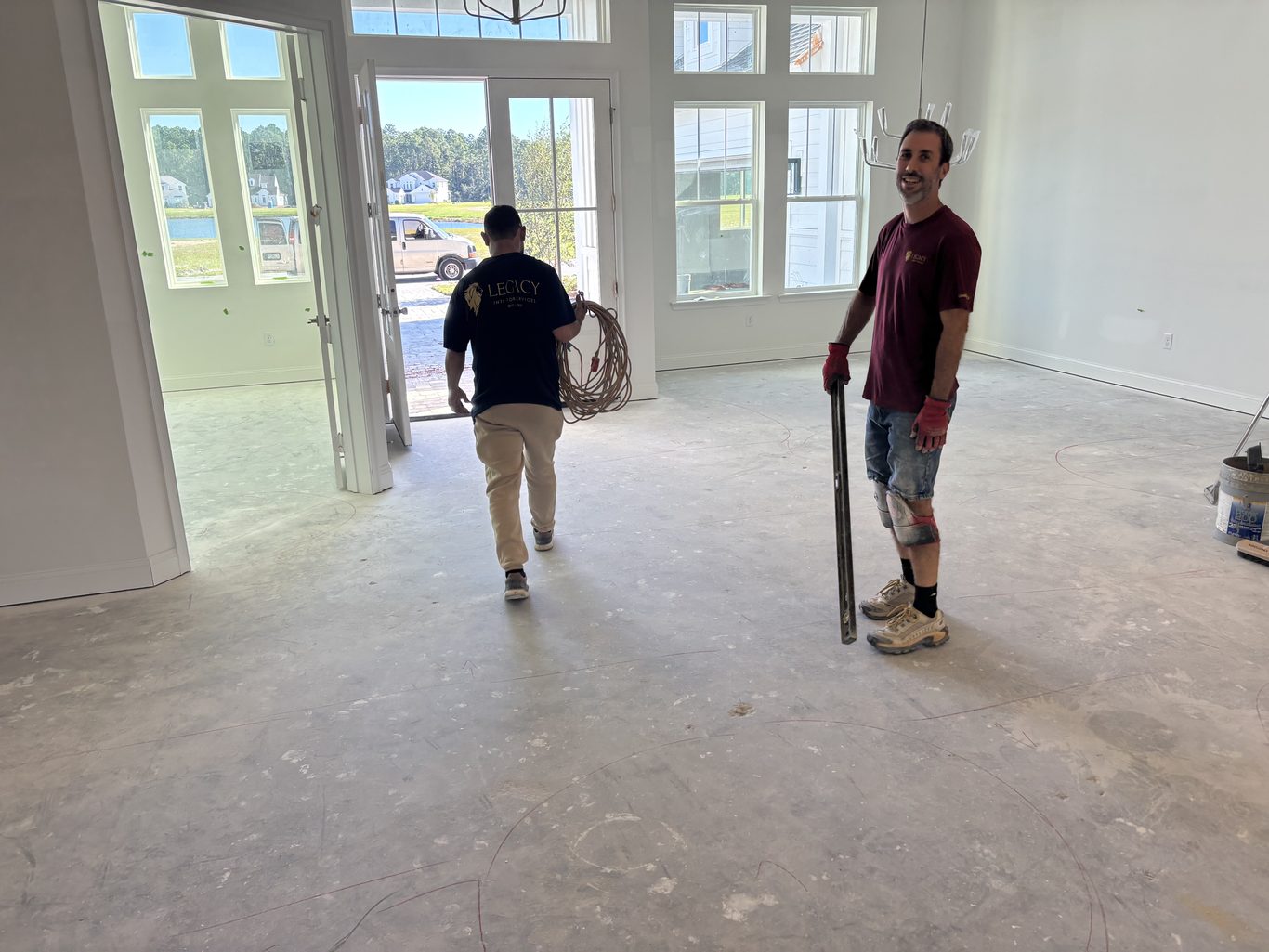
When investing in new flooring—whether it’s luxury vinyl plank, hardwood, tile, or laminate—the final look, feel, and longevity depend entirely on what lies beneath. An uneven subfloor can compromise even the highest-quality materials, leading to premature wear, annoying squeaks, and structural issues.
Proper subfloor preparation and leveling form the foundation of a successful installation, ensuring a flawless and durable finish.
Key Reasons Why Floor Leveling is Critical
- Prevents Premature Damage & Cracking: Unlevel spots create unsupported areas under planks, tiles, and engineered wood. When subjected to everyday weight—such as heavy furniture or foot traffic—these unsupported areas can crack, snap, or loosen over time.
- Eliminates Squeaks and Bouncing: Subfloor dips or high spots cause flooring to flex as you walk. Leveling eliminates these gaps, ensuring a solid, silent, and stable surface.
- Ensures Seamless Transitions: Proper leveling prevents awkward lips or uneven height transitions between rooms and different types of flooring materials.
- Protects Manufacturer Warranties: Many flooring manufacturers explicitly void their warranties if products are installed over subfloors that do not meet flatness specifications. Professional leveling safeguards your investment.
Questions and Answers
- Q: How can I tell if my floor needs leveling?
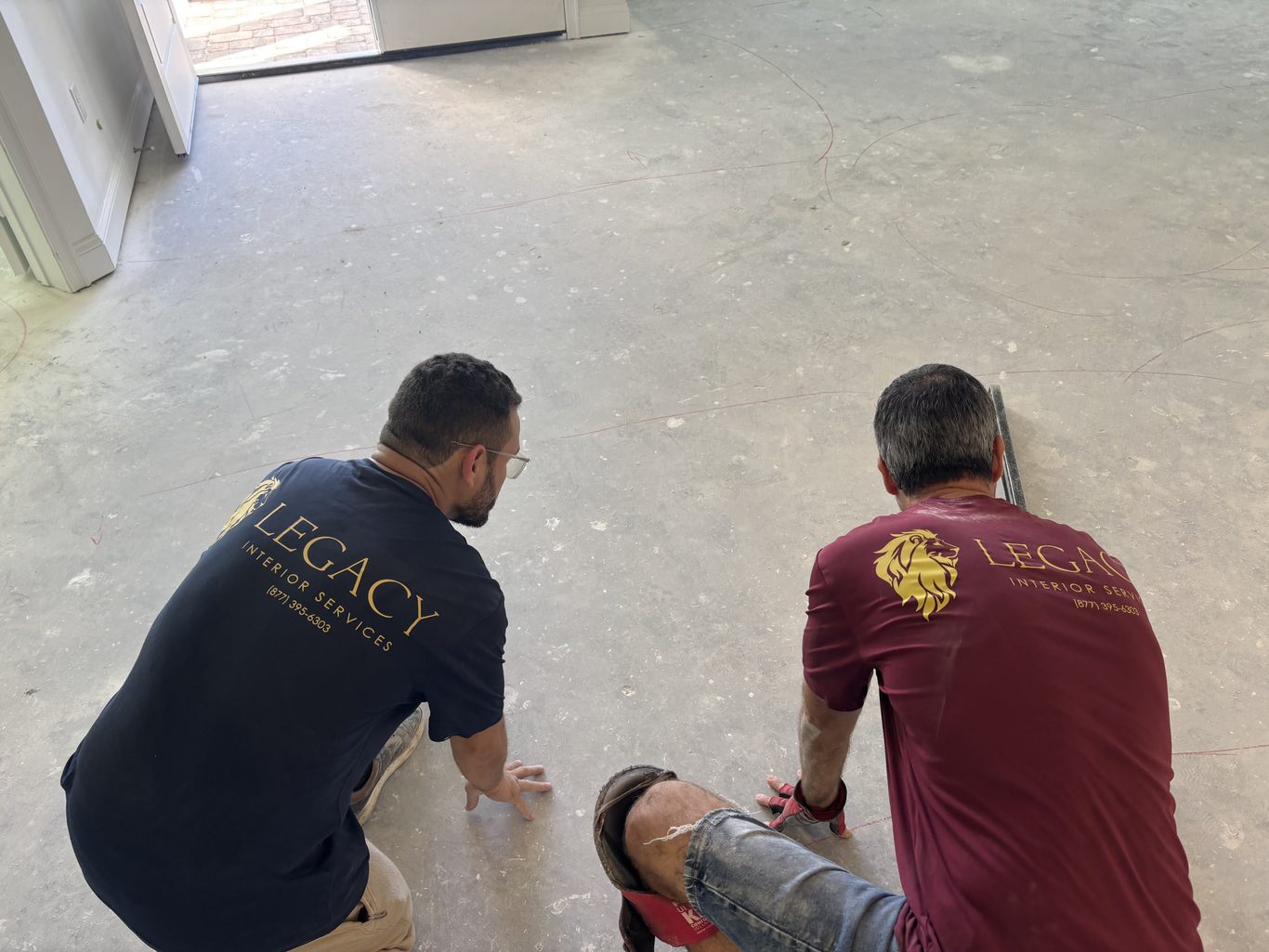
- A: You can check by placing a 6-foot or 10-foot straightedge or spirit level across various sections of the room. Gaps larger than $3/16$ of an inch over a 10-foot span typically indicate that leveling is required.
- Q: Can’t flooring installers just lay material over small bumps or dips?
- A: While thin underlayment pads can compensate for minor imperfections, significant dips and high spots will telegraph directly through flexible materials like vinyl plank and laminate, and cause rigid tiles to crack under pressure.
- Q: What materials are used to level a floor?
- A: Depending on whether your subfloor is concrete or wood, contractors use self-leveling underlayments, cementitious floor patches, specialized sanding, or structural shimming to achieve a completely flat plane.
Frequently Asked Questions (FAQ)
Q: How long does self-leveling compound take to dry?
A: Most standard self-leveling compounds are walkable within 4 to 6 hours, but generally require 16 to 24 hours (depending on thickness and ambient humidity) before the final flooring installation can begin.
Q: Does floor leveling add significant height to my floor?
A: Most leveling compounds are feathered out to a thin edge where the floor is already level, so overall height changes are minimal. However, major structural corrections may occasionally require minor adjustments to door clearances.
Q: Is floor leveling necessary for all types of flooring?
A: Yes. Whether floating, nail-down, or glue-down, every flooring type requires a flat and stable substrate to perform correctly and maintain its structural integrity over time.
The Legacy Interior Services Advantage
At Legacy Interior Services, we believe that doing the job right means never cutting corners on the foundation. To ensure the highest quality results, we provide free floor leveling before we install your new flooring. We take care of the crucial groundwork so your new floors look stunning and perform reliably for decades to come.