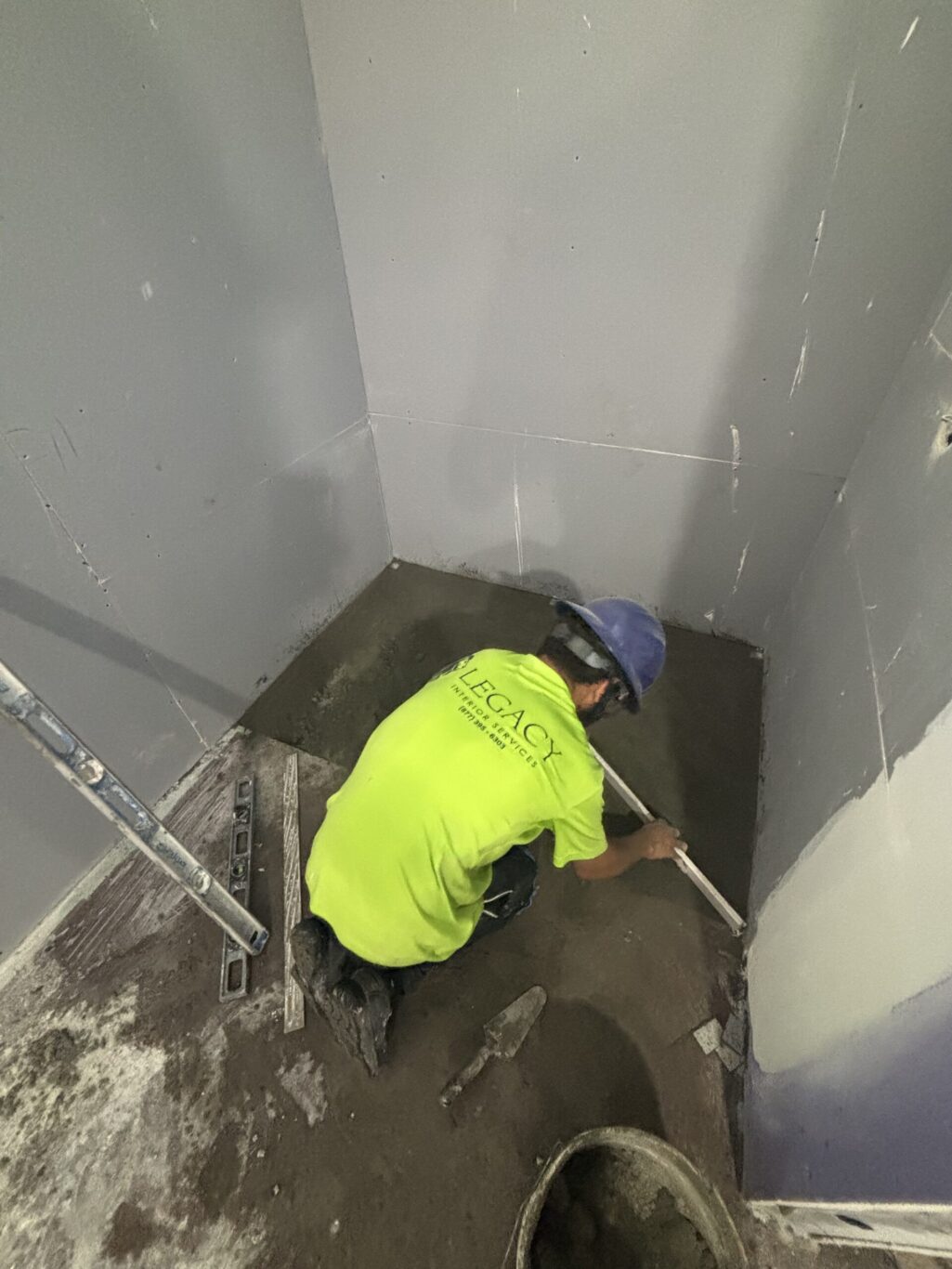
In commercial environments—ranging from retail spaces and corporate offices to healthcare facilities and warehouses—floors endure heavy foot traffic, rolling loads, and constant wear. Skipping or rushing the preparation phase often leads to premature flooring failure, lifting, cracking, and costly repairs.
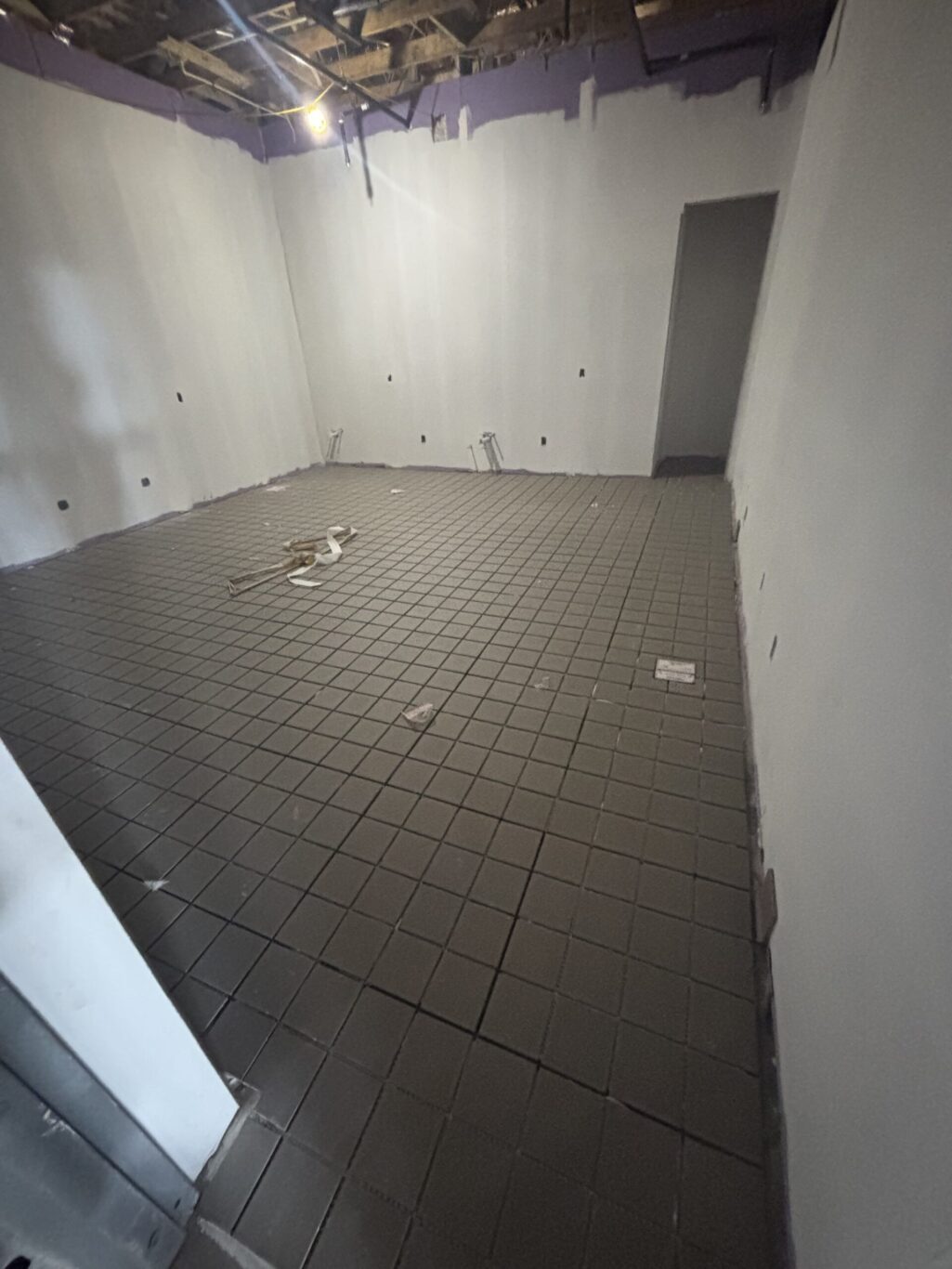
Proper floor prep ensures:
- Adhesion and Longevity: Adhesives require a clean, porous, and structurally sound substrate to bond correctly. Contaminants like dust, old adhesives, or curing compounds prevent proper bonding.
- Moisture Mitigation: Northeast Florida’s humid subtropical climate means moisture vapor emission is a constant challenge. Unmanaged moisture can cause tiles to loosen, wood to warp, and adhesives to break down.
- Surface Flatness: High spots, dips, and uneven areas can cause safety hazards, tripping risks, and visible imperfections through luxury vinyl tile (LVT), carpet, or epoxy coatings.
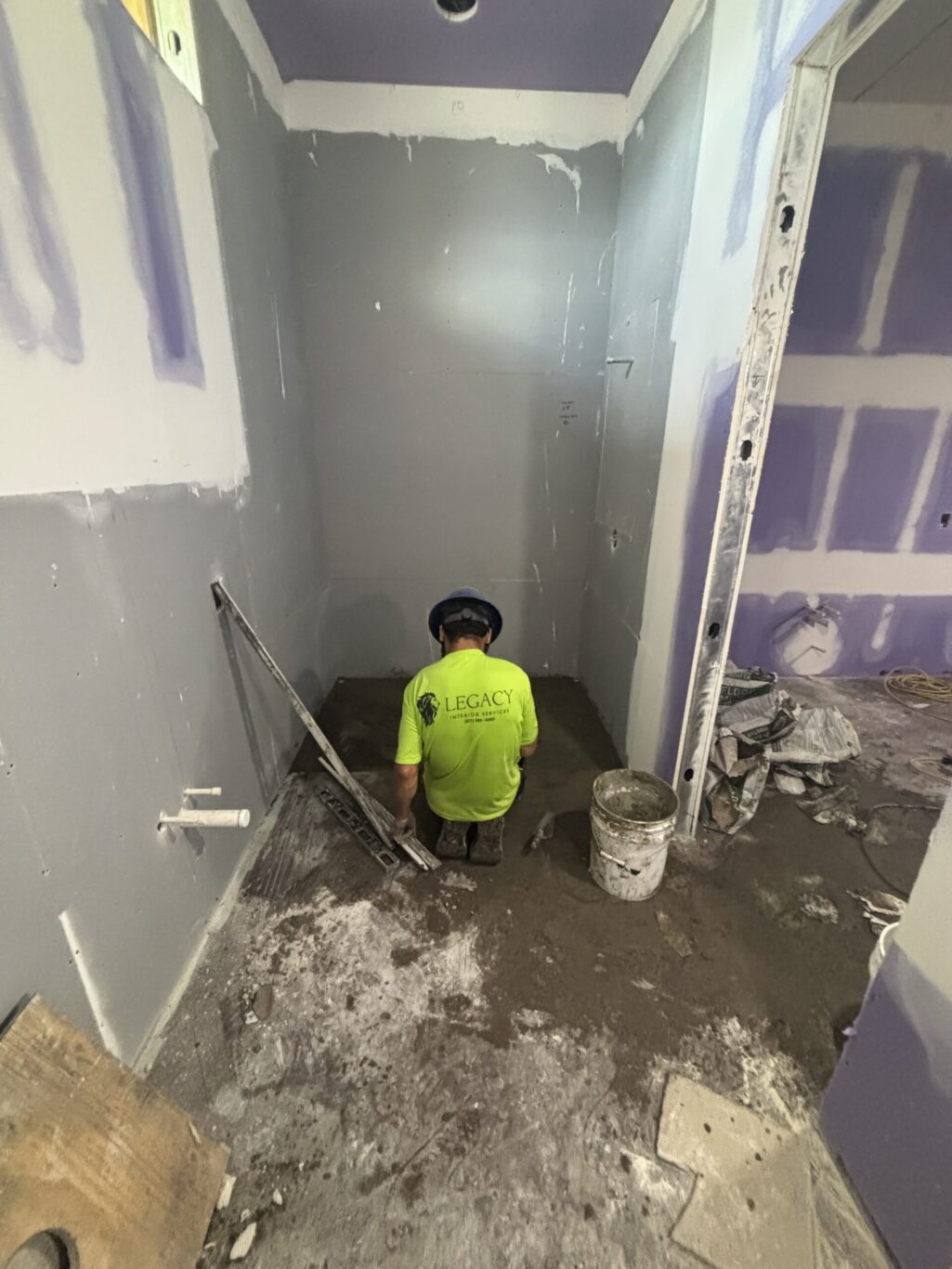
Key Measurements and Standards in Floor Prep
Achieving a durable commercial floor requires precise measurements and adherence to industry standards, primarily governed by organizations like the ASTM (American Society for Testing and Materials) and ACI (American Concrete Institute):
- Surface Flatness (FF) and Levelness (FL): Using specialized profilers, contractors measure concrete slabs to ensure they meet strict flatness tolerances. For most commercial finishes, a smooth and level substrate prevents lippage and uneven wear.
- Relative Humidity (RH) Testing (ASTM F2170): In-situ probe testing measures the internal moisture of the concrete slab. Most flooring manufacturers require RH levels to be at or below specific thresholds (often 75% to 85% depending on the material) before installation can proceed.
- Calcium Chloride Testing (ASTM F1869): Measures the moisture vapor emission rate (MVER) over a 24-hour period, determining how much water vapor is releasing from the concrete surface.
- Concrete Compressive Strength: Verifying that the underlying concrete slab has the structural integrity required to support commercial loads without crumbling or fracturing under pressure.
- pH Testing: Concrete with high alkalinity can break down flooring adhesives over time. Testing and neutralizing surface pH ensures a chemically stable environment for installation.
Essential Steps in the Process
- Surface Inspection & Testing: Assessing the slab for cracks, contamination, and accurate moisture levels using the measurements outlined above.
- Mechanical Preparation: Utilizing shot-blasting, grinding, or scarifying to remove old coatings, laitance, and debris while opening up the pores of the concrete.
- Patching and Leveling: Filling cracks, spalls, and low spots with high-strength self-leveling underlayments to create a uniform plane.
- Moisture Barriers: Applying specialized epoxy moisture mitigation systems if test results indicate vapor emissions exceed manufacturer limits.
Investing time in precise measurements and thorough commercial floor preparation saves time, prevents catastrophic flooring failures, and ensures your commercial space in Northeast Florida looks pristine and performs reliably for years to come.